The way we engage with the communities who access our services and how they help shape the support we offer is vital. This year’s World Mental Health Day recognises just that with the theme ‘Lived Experiences Heard: Real Voices, Real Change’.
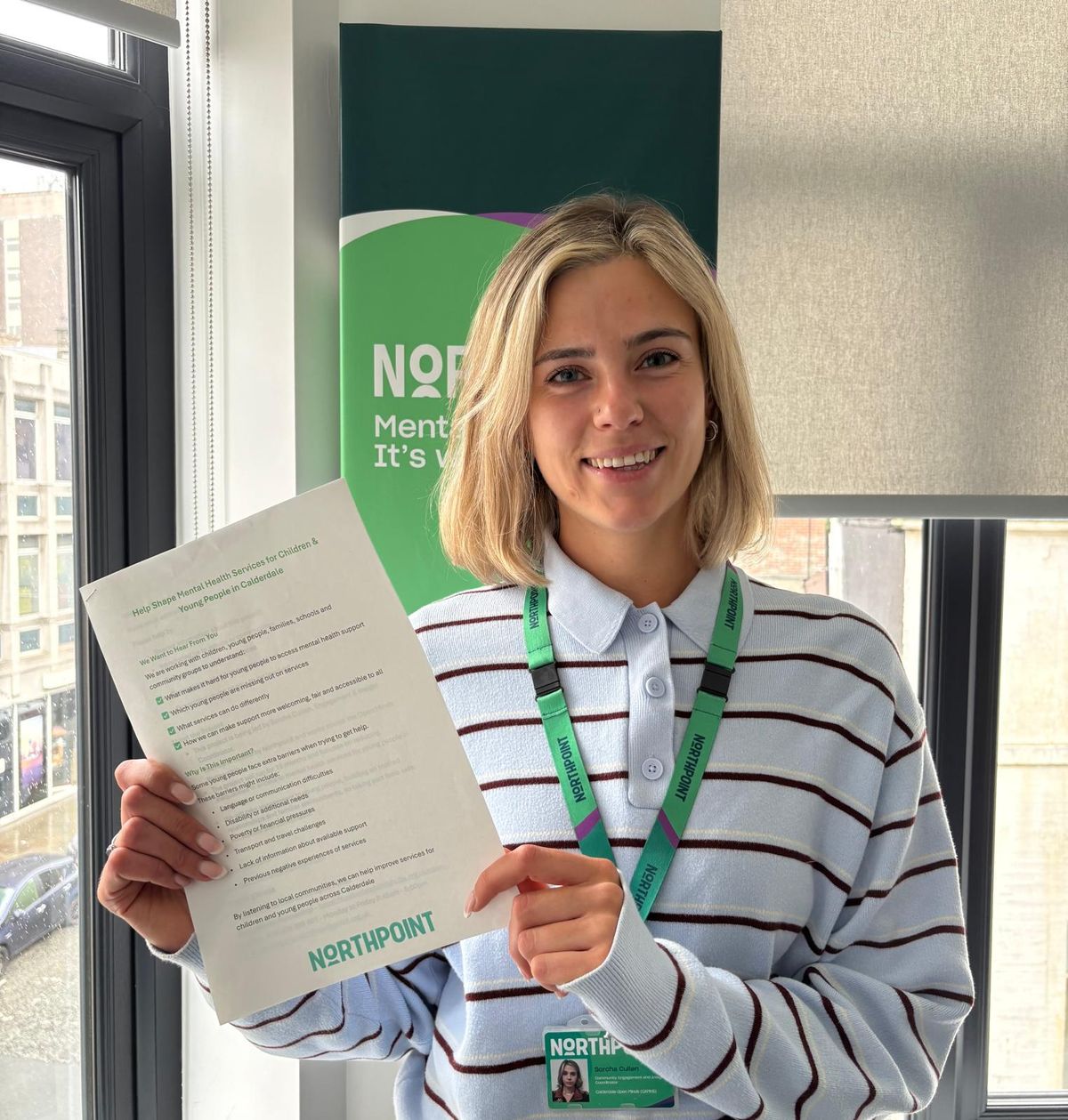
Sorcha Cullen, our Community Engagement and Insight Coordinator, has shared how the work she is doing is ensuring communities are guiding the way we deliver support to them.
My role was created because we need to better understand the experiences of those in Calderdale who may face greater barriers to accessing mental health support.
By engaging with them, we can identify and talk with communities whose voices may be less represented and understand what needs to change directly from the people who use our services.
Since I started in May 2026, I’ve been building relationships with young people, families, communities and partner organisations to gather their experiences and insight and use that learning to identify where barriers exist and what could be done differently.
Why engagement is so important?
Community engagement is fundamental to ensure that services are delivered in a way that is effective and accessible for the people that need to use them. For me, engagement isn't just about asking people what they think. It's about creating genuine opportunities for people to influence what happens next.
This means building relationships with trusted organisations and community groups and finding different ways for people to share their experiences.
People with lived experience bring fresh knowledge and perspectives. They understand what it feels like to navigate a service, what makes it accessible or difficult to access, and what might make someone feel listened to, understood and supported.
What engagement can teach us
Working closely with communities has reinforced for me that good mental health support isn't just about the intervention itself. It's also about how easy it is to find, understand and access that support.
I've also learnt that relationships really matter. Sometimes the person who helps someone take that first step towards support isn't a mental health professional; it might be a youth worker, teacher, community worker, family member or someone else they already trust.
It's made me think much more about the wider system around mental health support. If we want people to access help earlier, we need to think about awareness, trust, culture, language, accessibility and relationships alongside the clinical service itself.
How feedback shapes what we do
Real voices should lead to real conversations about change, and ultimately people should be able to see how their contribution has made a difference.
Throughout my engagement so far, one piece of feedback that I’ve heard is how children and young people would like more information about their therapist or practitioner prior to their first appointment.
This insight has led to collaborative exploratory work, to look at how we could share practitioner profiles, with children and young people prior to their first appointments to help alleviate anxiety and improve accessibility to our services. The team are excited to see this step forward.
This compliments ongoing work in Calderdale around refreshing how we advertise our building and therapy rooms on the website, which will enable children, young people and families to feel confident about where they’re going for their first appointment and who they will meet.
For me, ‘Real Voices, Real Change’ is about making sure that listening isn't where the process ends.
It's important to ask people for their views, collect feedback and say that engagement has happened. The key next step is showing people what happened because of what they told us, which often requires plenty of commitment and flexibility from the entire organisation.