Neurodiversity Celebration Week invites us to broaden our understanding of the many ways people navigate and interpret the world. It’s a chance to highlight the contributions of neurodivergent colleagues and consider how we can continue developing an environment where all ways of thinking are respected and supported.
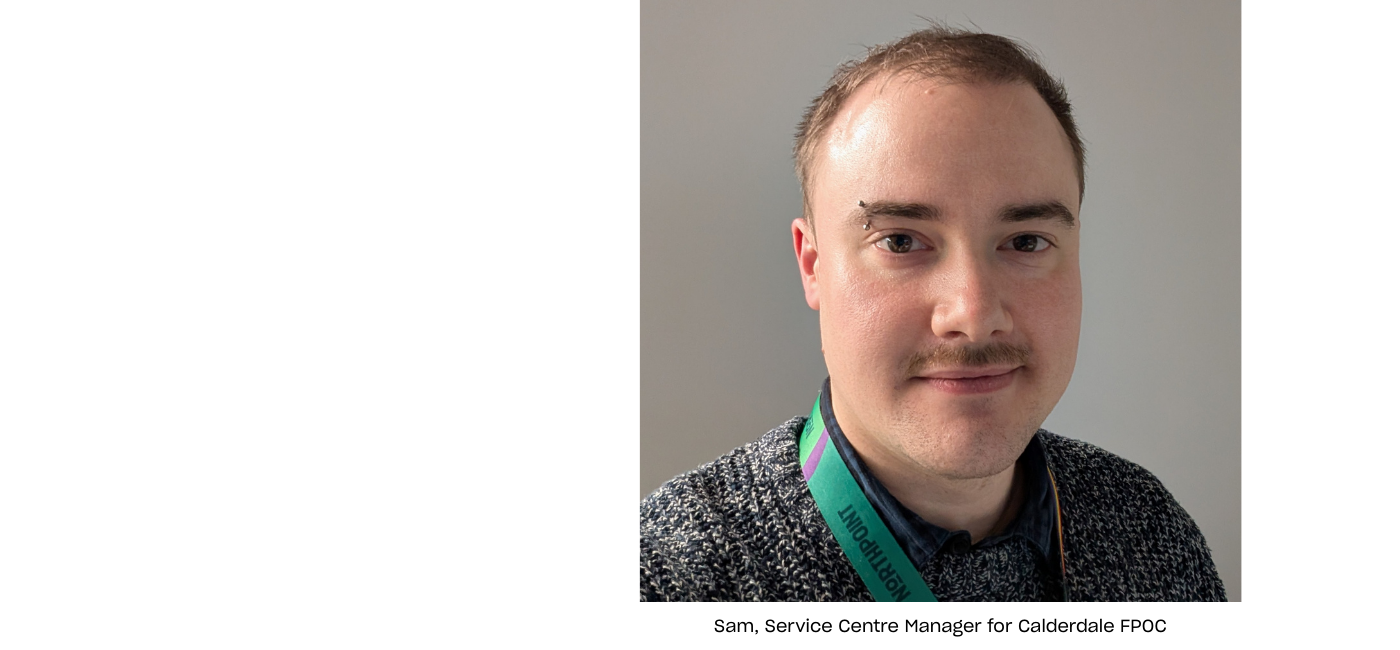
This guest blog has been written by Sam, our Service Centre Manager for Calderdale First Point of Contact. Sam is part of our Neurodivergent Peer Support Group, a group that allows colleagues who identify with being neurodivergent to discuss and share experiences of living as a neurodivergent individual. It also helps to ensure everyone is treated fairly, can access information on how to make life at work more accessible and aims to empower neurodivergent colleagues, so that everyone’s voice is heard.
Drawing on his own experiences as an autistic person, Sam reflects on what autism means to him and invites us to think more carefully about how our everyday assumptions, language and environments can shape the experience of colleagues whose way of thinking may differ from what is often seen as the ‘norm’.
In the piece below, Sam shares his perspective and highlights the importance of challenging assumptions as part of creating a truly inclusive workplace.
Insights on autism and neuro-inclusion
For me, being autistic means that my neurology – the way that I think and experience the world – is atypically different to most others. This affects all areas, like language processing, sensory experience, executive function, motor skills, and pretty much everything else you can think of. Autism isn’t really a ‘condition’, and certainly not a ‘disorder’ - it’s my way of being.
The reality is that we all have a unique neurology and ways of experiencing the world. However, mine is especially outside the typical range for most people.
The impact of everyday assumptions
I never find being autistic difficult. In fact, it requires no effort at all. But I do find neuronormativity difficult. Neuronormativity is where we subconsciously assume that there’s a normal way of thinking about, functioning in, and experiencing the world, and we set up our world around that assumption.
For example, when people assume my sensory experience is similar to theirs, and don’t ask me how I’d prefer the lighting, the noise, or the temperature. Another example is when people assume that I would prefer text with images. For me, this creates more information and so takes me longer to process because it’s broken up with extraneous things.
The challenge is not that others’ preferences are different from my own – it’s when we make assumptions about who other people are, how they think, and how they experience the world.
How can we make the workplace more neuroinclusive?
Sam shared three small measures which can help neurodivergent professionals feel safe and supported in the workplace and that can help towards creating a more neuroinclusive environment where colleagues can thrive and be themselves.
Think about sensory environments in the office
Some people are hyposensitive and work best when there’s lots of stimulus and ‘buzz’ around. Others are hypersensitive, preferring environments which are free of stimulus.
It is helpful for workplaces to be aware of how meeting some sensory needs might impact others and look into whether there are ways they can create different kinds of working spaces to accommodate.
Ask how colleagues prefer to communicate
Some people prefer things in writing, and find verbal communication more difficult to process. Others find writing harder and would prefer to talk things through.
Workplaces could look at how colleagues might need us to communicate with them, in order to best understand. Start the conversation by asking how teams might prefer to communicate and if they have any preferred communication styles.
Consider the language you use
When people call autism a disorder, or a condition, the implication is that there’s something wrong with me, or that there’s a ‘real’ person underneath a ‘condition’.
While everyone has their own preferred language to describe themselves, autistic people have shown a strong community preference for how we want to be talked about. A survey conducted by Autism Action to identify language preferences when describing autism, found that using identity-first language (e.g. ‘autistic person’), is often preferred.
Some talk about 'symptoms' of autism, which has an implication that autism is an illness. Autistic people are usually more comfortable using other terms, like ‘characteristics of autism’ or ‘autistic traits’. Beacon Films have also shared a helpful video on language to use around autism.
The info sheet from the National Autistic Society can also be helpful to look at what language is and isn't helpful and, more importantly, why.
This isn't so much about policing language, but more about considering what you're implying when you use language.